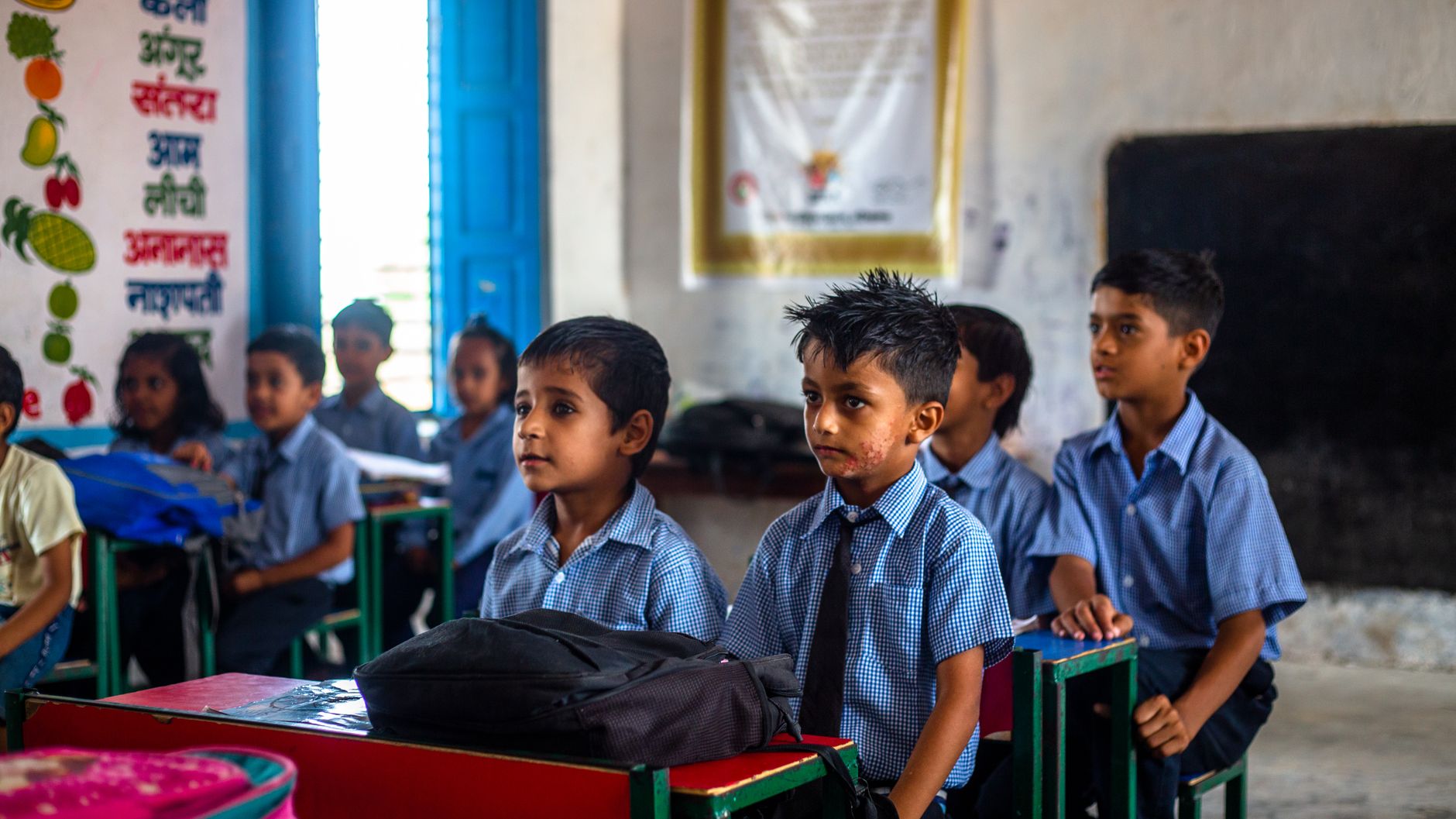
India's education system has long been a subject of debate, with growing concerns that its centralised structure may be failing the nation's youth. With over 260 million students enrolled across schools and universities, the country operates one of the world's largest education systems, yet questions persist about its ability to prepare young people for modern employment and personal growth.
The Case for Centralisation
Historically, centralised control over education was seen as necessary for a newly independent India. A unified curriculum and standards were meant to ensure consistency across a diverse nation with multiple languages, cultures and economic conditions. The National Council of Educational Research and Training (NCERT) and various central boards have attempted to provide equal opportunities regardless of geography.
However, critics argue that what worked in the 1950s may not suit today's rapidly changing economy and diverse regional needs. The one-size-fits-all approach often fails to account for local industries, cultural contexts and varying levels of infrastructure development across states.
Where the System Falls Short
The current education framework faces several persistent challenges. Rote learning remains dominant in most institutions, with students pressured to memorise information rather than develop critical thinking skills. Examination systems prioritise marks over actual competence, creating stress while failing to assess real-world capabilities.
Furthermore, the curriculum often lacks alignment with job market requirements. Engineering colleges produce lakhs of graduates annually, yet industry reports suggest a significant portion lack employability skills. Meanwhile, vocational training and skill development receive insufficient emphasis despite their importance for economic growth.
Regional disparities also persist. States with better resources and governance achieve superior educational outcomes, while others struggle with basic infrastructure. A centralised system cannot adequately address these varying ground realities.
Benefits of Decentralisation
Allowing states greater autonomy over education policy could yield multiple benefits. Regional governments better understand local economic needs and can design curricula that prepare students for industries relevant to their area. Coastal states might emphasise maritime studies, while agricultural regions could strengthen agri-business education.
Decentralisation would also enable experimentation and innovation. States could pilot different teaching methodologies, assessment techniques and technological integrations. Successful models could then be adopted by others, creating healthy competition and continuous improvement.
Language instruction presents another compelling argument. While Hindi and English dominate centralised curricula, many students struggle with these languages, hampering their learning. Greater state control would allow education in mother tongues during formative years, improving comprehension and outcomes.
Local control might also increase accountability. When education policies are decided centrally, state governments can deflect blame for failures. With decentralisation, voters can directly hold regional authorities responsible for education quality, potentially driving better performance.
Global Examples
Several successful education systems worldwide operate on decentralised models. Finland, consistently ranked among the world's best, grants significant autonomy to municipalities and schools. The United States allows states to design their own standards within a broad federal framework. Germany's federal system enables regions to tailor education to local needs while maintaining quality.
These examples demonstrate that decentralisation need not compromise standards. National-level oversight can ensure minimum quality benchmarks while allowing flexibility in implementation.
Potential Challenges
Decentralisation is not without risks. Unequal state capacity could widen disparities, with richer states pulling ahead while poorer ones struggle. Political interference might increase at the state level, with education becoming subject to regional political agendas.
Maintaining student mobility across states could become complicated if curricula diverge significantly. A student moving from Maharashtra to Tamil Nadu might face adjustment difficulties if educational approaches differ drastically.
Quality control mechanisms would need strengthening. While the centre currently sets minimum standards, effective decentralisation requires robust state-level regulatory bodies and teacher training institutions.
Finding the Middle Path
Rather than complete decentralisation, a balanced approach might work best. The central government could define broad learning outcomes and competencies while allowing states flexibility in curriculum design and pedagogy. National standards for teacher qualifications and infrastructure could coexist with regional autonomy in content and assessment.
Investment in building state capacity must accompany any devolution of powers. Poorer states need financial and technical support to exercise autonomy effectively. Interstate collaboration platforms could facilitate knowledge sharing and prevent isolation.
The National Education Policy 2020 has taken steps toward flexibility, but implementation remains centralised. True reform requires matching policy intent with administrative changes that empower regional authorities.
India's demographic dividend depends on educated, skilled youth ready for the future economy. Whether centralisation or decentralisation better serves this goal deserves serious examination beyond political rhetoric, focusing instead on evidence and outcomes.